
Every parent wants to give their child the healthiest possible start in life, and oral health is an important part of that journey. One of the most common questions new and expecting parents ask is when do kids start going to the dentist. While many people assume a dental visit is only necessary once all the baby teeth have appeared, pediatric dentists recommend scheduling the first appointment much earlier.
Early dental visits help establish healthy habits, identify potential concerns before they become serious, and make children feel comfortable in a dental environment. By introducing your child to the dentist at the right age, you can lay the foundation for a lifetime of healthy smiles.
In this guide, you’ll learn when your child should have their first dental visit, why early appointments matter, what happens during the first checkup, and how you can prepare your child for a positive experience.
Why Early Dental Visits Matter
Many parents are surprised to learn that baby teeth play an important role in a child’s overall health and development.
Primary teeth help children:
- Learn to chew properly
- Develop clear speech
- Maintain space for permanent teeth
- Support healthy jaw development
- Build confidence through a healthy smile
Even though baby teeth eventually fall out, they still require proper care. Tooth decay can develop soon after teeth erupt, making early preventive care extremely important.
Regular dental visits also allow your child’s dentist to monitor growth, detect problems early, and provide guidance tailored to your child’s needs.
When Should Your Child Have Their First Dental Visit?
The answer to when do kids start going to the dentist is simpler than many parents expect.
Most pediatric dental professionals recommend scheduling your child’s first dental visit by their first birthday or within six months after the first tooth appears, whichever comes first.
For many children, the first tooth erupts around six months of age. Waiting until preschool or kindergarten may allow small problems to become larger issues that require more extensive treatment.
Early appointments are primarily preventive rather than treatment-focused. They give parents the opportunity to ask questions while allowing dentists to monitor healthy oral development from the very beginning.
Signs Your Child Should See a Dentist Sooner
Although most children follow the recommended timeline, certain situations may require an earlier visit.
Contact a pediatric dentist if your child experiences:
- White, brown, or dark spots on newly erupted teeth
- Tooth discoloration
- Bleeding gums
- Mouth injuries
- Delayed tooth eruption
- Persistent thumb sucking concerns
- Difficulty feeding due to oral discomfort
Prompt evaluation can often prevent minor concerns from becoming more complicated.
What Happens During Your Child’s First Dental Visit?
Many parents worry that the first appointment may be stressful for their child. In reality, first visits are typically gentle, short, and designed to help children feel safe.
During the appointment, the dentist may:
1. Examine Your Child’s Teeth
The dentist checks for healthy tooth development, early signs of decay, and any abnormalities.
2. Evaluate Gum Health
Healthy gums are just as important as healthy teeth. The dentist will examine the gums for signs of irritation or infection.
3. Assess Jaw and Bite Development
Your child’s bite and jaw growth are monitored to ensure everything is developing normally.
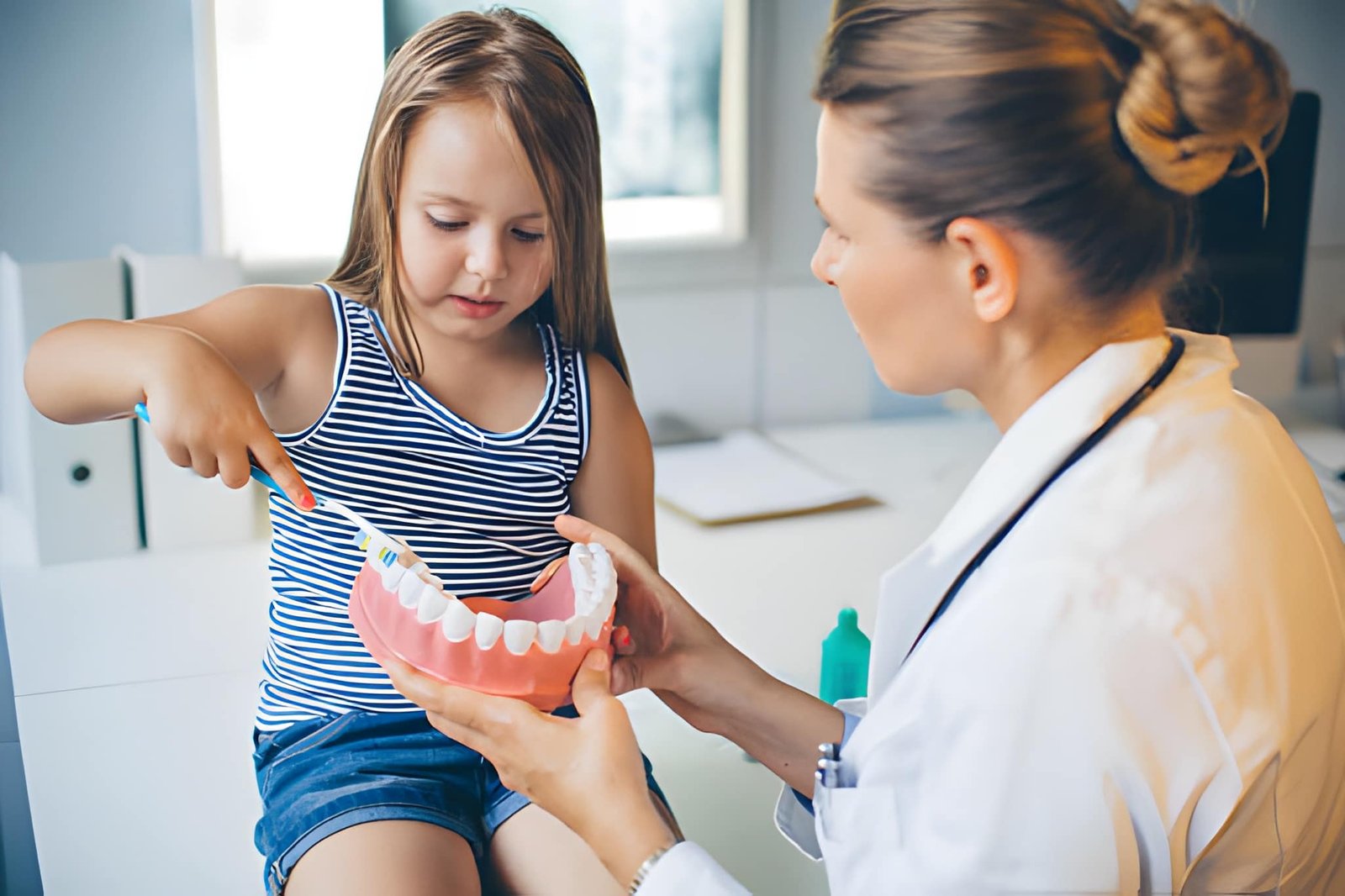
4. Discuss Oral Hygiene
Parents receive guidance on:
- Brushing techniques
- Fluoride recommendations
- Toothpaste selection
- Teething care
- Bottle and sippy cup habits
5. Answer Questions
The first visit is an excellent opportunity to discuss any concerns about your child’s oral health.
Most first appointments last less than 30 minutes and focus on education and prevention rather than treatment.
How to Prepare Your Child for Their First Dental Visit
A little preparation can help make the experience enjoyable for everyone.
1. Choose a Morning Appointment
Children are often more cooperative when they are well-rested.
2. Keep the Conversation Positive
Talk about the dentist as someone who helps keep teeth healthy.
Avoid using words like:
- Pain
- Hurt
- Injection
- Drill
Instead, focus on positive experiences and healthy smiles.
3. Read Children’s Books About the Dentist
Storybooks can help children understand what to expect in a fun and reassuring way.
4. Practice Opening Wide
Pretending to count teeth at home helps children become familiar with the process.
5. Bring Comfort Items
A favourite toy or blanket may help younger children feel more relaxed during the appointment.
Why Pediatric Dentists Are Different
While general dentists can treat children, pediatric dentists receive additional training focused specifically on infant, child, and adolescent oral health.
Pediatric dental offices are designed to create a welcoming environment where children feel comfortable.
Specialized training includes:
- Child behaviour management
- Growth and development
- Preventive care
- Treatment for children with special healthcare needs
- Early orthodontic assessment
This expertise allows pediatric dentists to provide age-appropriate care from infancy through adolescence.
Common Dental Milestones During Early Childhood
Understanding your child’s dental development can help you know what to expect.
- Around Six Months
The first baby tooth usually begins to appear.
- By Age One
Several baby teeth are typically visible, making this an ideal time for the first dental visit.
- Between Ages Two and Three
Most children have a full set of 20 primary teeth.
- Around Age Six
Permanent teeth begin replacing baby teeth. Regular dental visits throughout these stages allow dentists to monitor healthy development and identify concerns early.
Tips for Keeping Your Child’s Teeth Healthy Between Visits
Dental care starts at home long before children can brush independently.
1. Brush Twice Daily
Use a soft toothbrush designed for your child’s age.
2. Use the Correct Amount of Toothpaste
Children under three generally need only a rice-sized smear of fluoride toothpaste, while older children typically use a pea-sized amount, unless otherwise advised by their dentist.
3. Limit Sugary Drinks
Frequent exposure to sugary beverages increases the risk of tooth decay.
4. Encourage Healthy Snacks
Fresh fruits, vegetables, cheese, and yogurt are generally better choices for developing teeth than sticky sweets or sugary snacks.
5. Avoid Putting Babies to Bed with Bottles
Milk and juice left on teeth overnight can contribute to early childhood tooth decay.
6. Schedule Regular Checkups
Routine examinations help maintain healthy teeth while preventing problems before they require more complex treatment.
Conclusion
Knowing when do kids start going to the dentist is one of the first steps toward protecting your child’s oral health. Scheduling the first dental visit by age one allows potential concerns to be identified early while helping your child become familiar with the dental office in a positive, supportive environment.
At Kids Town Pediatric Dentistry, we are committed to making every child’s first dental visit comfortable, educational, and enjoyable. Our experienced team provides compassionate care tailored to infants, toddlers, and children of all ages. If it’s time for your child’s first appointment, contact us today to schedule a visit and give your child the best possible start toward a lifetime of healthy smiles.
Frequently Asked Questions
- What Age Should My Child First Visit the Dentist?
Children should generally visit a dentist by their first birthday or within six months after their first tooth appears.
- Is the First Dental Visit Painful?
No. The first appointment is usually gentle and focuses on examination, prevention, and education.
- How Often Should Children Visit the Dentist?
Most children benefit from dental checkups every six months, although your pediatric dentist may recommend a different schedule based on individual needs.
- What If My Child Is Afraid of the Dentist?
Pediatric dentists use child-friendly techniques to help children feel comfortable and build positive dental experiences.
- Can Tooth Decay Affect Baby Teeth?
Yes. Baby teeth can develop cavities just like permanent teeth, making early preventive care extremely important.